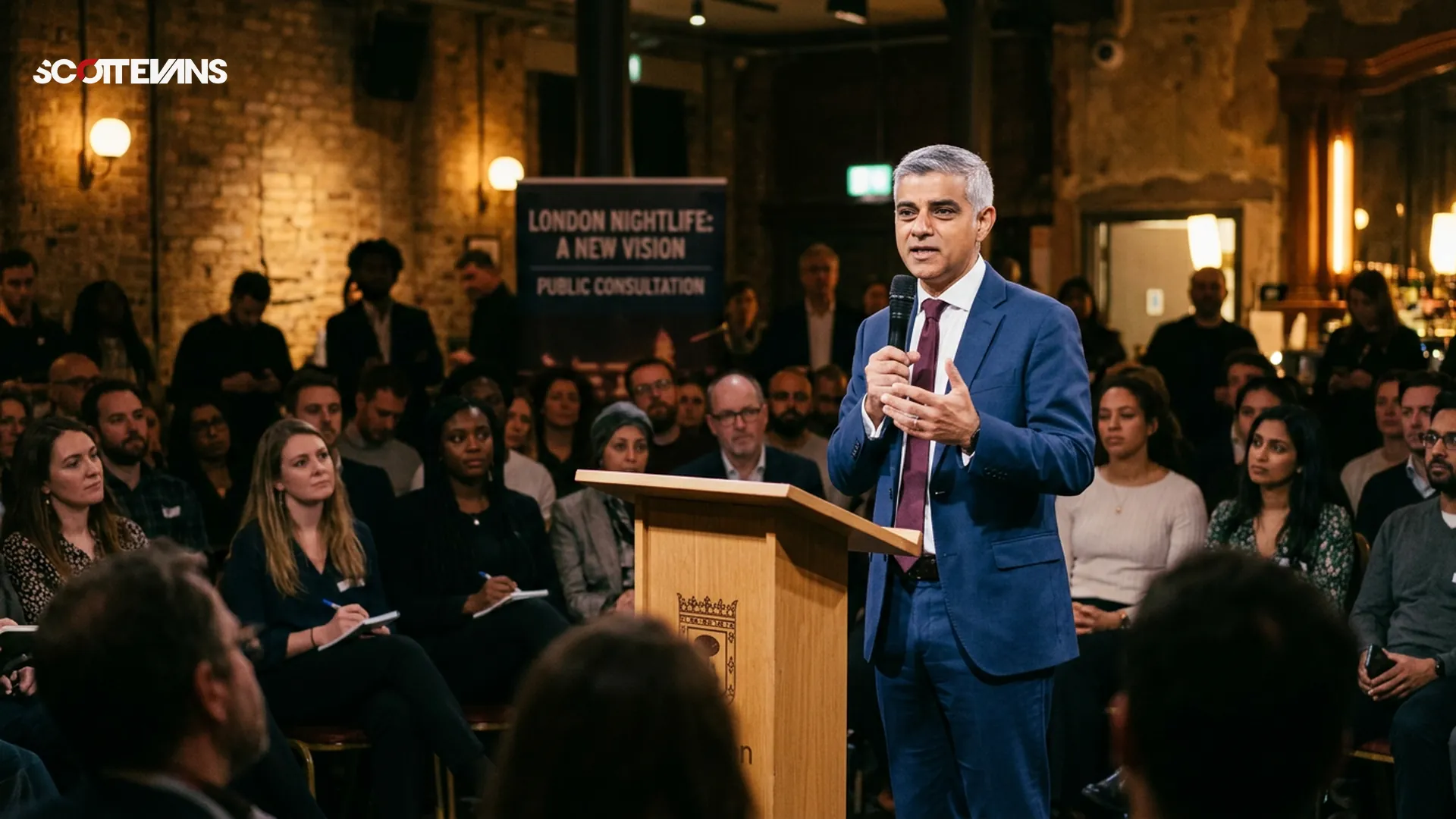
London's Nightlife Revolution: Inside the New Licensing Overhaul - Scott Evans DJ
If you have ever wondered why your favorite underground venue in Hackney shuts at midnight while an identical club in Lambeth rocks until 4 AM, you have experienced London's licensing postcode lottery firsthand. For working DJs, these inconsistent rules do not just affect where you can play - they determine your earning potential, your set lengths, and whether the venues you rely on for income can even stay open.
The current system forces each of London's 33 boroughs to maintain separate licensing policies. This fragmentation creates a nightmare scenario where opening a venue in Westminster requires a completely different approach than opening the same venue in Camden. Industry sources confirm that this bureaucratic maze frequently delays new openings or blocks them entirely, reducing the total number of available gigs across the capital.
Booking Strategy Tip
What Is the Strategic Licensing Policy?
The Strategic Licensing Policy represents a fundamental shift in how London approaches its nighttime economy. Rather than treating each borough as an isolated licensing kingdom, this framework creates standardized criteria that apply across the entire city.
Under the proposed changes, licensing committees must weigh economic and cultural contributions alongside traditional concerns like noise and anti-social behavior. This means a venue hosting grassroots music culture or supporting local employment could secure more favorable licensing terms, even if some residents object.
When applying for personal alcohol licenses or temporary event notices under the new system, document your cultural contribution to the area. Keep portfolios of community events, local artist showcases, or charity fundraisers you have supported - these cultural impact records could carry significant weight in future licensing decisions that formally factor in community benefit.
The policy also introduces a crucial "call-in" power. If the consultation receives government approval, Khan will gain authority to override local borough decisions on applications deemed significant to London's wider cultural or economic interests. Large-scale venues and major festivals could bypass local veto power that might otherwise kill projects benefiting the entire city.
| Factor | Current Borough System | Proposed Strategic Policy |
|---|---|---|
| Licensing Standards | 33 separate policies per borough | Unified city-wide framework |
| Cultural Contribution | No formal recognition in decisions | Legally weighted in licensing |
| Operating Hours | Borough-dependent curfews | Standardized later openings encouraged |
| Venue Closure Risk | High due to arbitrary local decisions | Lower with economic impact assessment |
| Multi-venue Operations | Research each borough separately | Consistent baseline standards |
| Override Authority | Local veto can block any project | Mayoral call-in for strategic venues |
How This Changes Your Gig Economy
For mobile DJs and resident selectors alike, standardized licensing creates predictable work environments. Currently, performing across borough lines requires researching completely different noise restrictions, set time limitations, and security requirements. The new framework promises consistent baseline standards, making it easier to plan multi-venue tours or regular rotation gigs.
The focus on economic impact also protects venues from closure. When licensing decisions consider a club's contribution to local employment and tourism, arbitrary shutdowns become harder to justify. This stability means more long-term residencies and fewer panicked calls about cancelled gigs due to license revocation.
Extended hours become more achievable under the new system. Khan explicitly stated intentions to encourage later opening times across the capital. For DJs, this translates to longer peak-time sets and increased earning potential per booking. Rather than rushing through a two-hour warm-up set before last orders, you might find yourself crafting proper journey sets that extend into the early morning - the kind of extended performances that build real dance floor moments.
Tempo & Timing: tap tempo
Tap a manual tempo estimate, then use the same BPM for effects and phrases
The Technical Side: What Stays the Same?
While the Strategic Licensing Policy changes the decision-making framework, it does not replace the Licensing Act 2003 itself. You will still need your Personal License if serving alcohol, and venues will still require Premises Licenses. The difference lies in how committees evaluate applications and the consistency of conditions imposed.
Temporary Event Notices (TENs) for one-off parties remain unchanged in process, though local authorities may adopt more uniform attitudes toward approving them.
Making Your Voice Heard
The six-week consultation window gives industry professionals a rare opportunity to shape policy before it solidifies. Whether you run a small bar that hosts jazz nights or operate a multi-room nightclub, your operational experience provides crucial context for policymakers.
Industry reports indicate that previous nightlife taskforce findings heavily influenced this current proposal. The London Nightlife Taskforce, an 11-person body established this year to address challenges facing the capital's after-dark economy, provided foundational research showing how inconsistent licensing damages cultural output.
When submitting feedback, focus on specific operational challenges you have faced. Do you avoid booking certain boroughs due to restrictive policies? Have you lost gigs because venues could not secure reasonable hours? Concrete examples carry more weight than general support statements.
Timeline and Implementation Reality
If the consultation receives positive response and government approval, implementation could begin within 12 to 18 months. However, boroughs will likely transition gradually, with some adopting the strategic framework faster than others.
During this transition period, expect some confusion as local authorities adjust to new guidelines. Keep documentation of all licensing interactions.
The Mayoral override power specifically requires secondary legislation, meaning it could face delays even if the broader policy moves forward. Do not expect immediate salvation for blocked super-club applications, but anticipate gradual standardization of existing licensing practices.
Protecting Culture Over Commerce
One of the most significant aspects of this overhaul involves formally recognizing cultural value. Previously, a venue's contribution to local music scenes held no legal weight against noise complaints or development pressures. The new policy framework acknowledges that grassroots music venues provide essential cultural infrastructure worth preserving.
This recognition could prove vital for protecting smaller rooms that nurture emerging talent. When a 200-capacity basement club can demonstrate it serves as an incubator for artists who later headline festivals, licensing committees must weigh that cultural pipeline against resident complaints.
For resident DJs, this cultural protection means the small rooms where you cut your teeth or experiment with new sounds gain legal armor against developers seeking to convert them into residential units. The policy explicitly aims to support "high streets" and diverse nighttime offerings, not just major commercial operations.
Practical Steps for Immediate Action
While waiting for these changes to implement, optimize your current operations using existing tools. Consider diversifying your borough portfolio now. If the standardization passes, early experience across multiple London areas positions you perfectly for the unified market.
Venue owners should audit their current licenses against the proposed cultural criteria. Start documenting community benefit now, collecting testimonials from local artists, charity partners, and economic impact statements. When the new framework activates, having this evidence ready provides competitive advantage in renewal applications.
Frequently Asked Questions
The consultation runs for six weeks from the announcement date. Industry sources suggest the window closes in early 2026, giving professionals limited time to submit detailed operational feedback about their specific licensing challenges.
Key Takeaways
- Core takeaway: Should djs care about works best with a repeatable prep-to-performance workflow.
- Prioritize one stable process before adding extra tools or plugins.
- Track outcomes after each set and keep only steps that improve reliability and results.