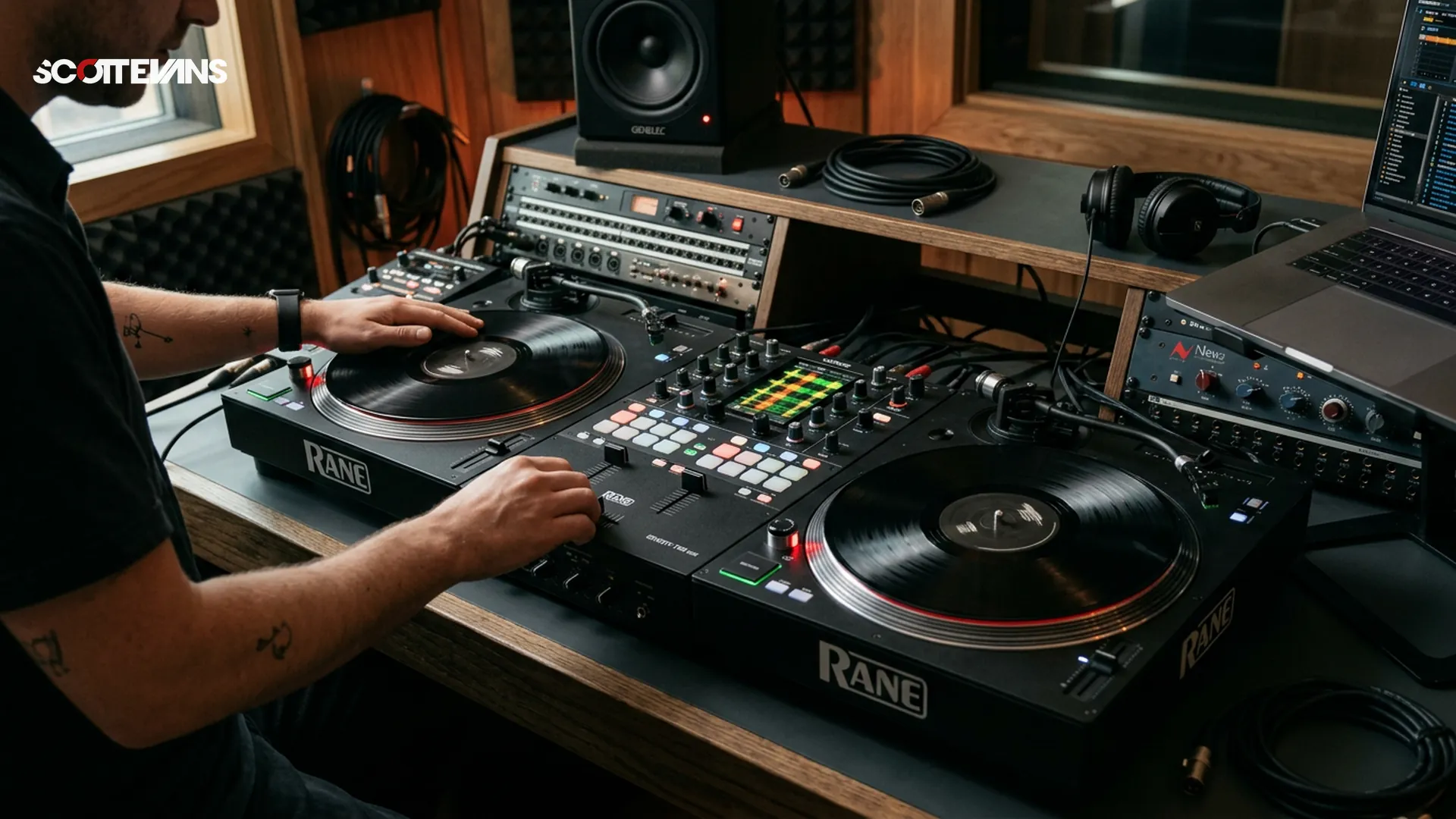
Rane System One Standalone Motorised DJ Controller Deep Dive | Scott Evans DJ
What Makes the System One Revolutionary?
Have you been waiting for a DJ controller that combines the tactile satisfaction of vinyl with the freedom of laptop-free performance? The Rane System One arrives as the answer to that specific prayer. As the first standalone unit featuring motorised platters, it bridges the gap between traditional turntablism and modern digital workflows.
The unit ships with the same high-quality 7.2-inch motorised platters found on previous Rane motorised controllers, complete with authentic slipmats and vinyl tops. These require self-assembly upon unboxing, a five-minute process that connects you physically with the hardware before you even power it on. At 29.4 pounds (13.3kg), this is substantial gear, built from metal with adjustable feet that create an elevated, ergonomic working position.
Tempo & Timing: tap tempo
Tap a manual tempo estimate, then use the same BPM for effects and phrases
The Vertical Screen: A New Perspective
Perhaps the most immediately striking feature is the 7-inch vertical touchscreen positioned flush above the channel faders and crossfader. This placement pushes the EQ controls to either side, creating a layout unfamiliar to most digital DJs but reminiscent of classic vinyl setups where the mixer sits between two decks.
The vertical orientation displays waveforms in portrait mode by default, though horizontal viewing remains available for traditionalists. Industry analysts note this vertical waveform presentation echoes the classic Serato Scratch Live aesthetic, offering a fresh perspective that many veteran DJs find intuitive. The transition to RGB waveforms marks a significant departure from Engine DJ's traditional blue/green color scheme, providing better visual distinction between track elements during complex blends.
Setup Reality Check: Patience Required
Setting up the System One should theoretically be plug-and-play, but real-world testing reveals some friction points. The unit guides users through Wi-Fi connection and firmware updates upon first boot, though network recognition required multiple reboots during our testing phase. This trial-and-error initialization might frustrate DJs eager to perform immediately after unboxing.
Once connected, the System One offers impressive connectivity options. Three USB-A ports, one USB-C port, and an SD card slot provide multiple storage solutions. Additionally, the unit accommodates a 2.5-inch SATA drive internally (sold separately), offering more local storage flexibility than most standalone competitors.
Pro Tip
Motorised Platters: The Main Event
The motorised platters deliver exactly what scratch DJs and vinyl veterans crave: adjustable torque settings (low or high) and customizable stop times that simulate authentic vinyl spindown effects. The response feels smooth and immediate, though whether they replicate "real" turntable feel depends entirely on your standards and previous equipment experience.
When the motors are engaged, you can perform traditional scratch techniques, back-cueing, and pitch bending exactly as you would with vinyl. However, switching the motors off (to simulate CDJ-style fixed platters) introduces a significant limitation: you lose the ability to perform vinyl-style scratching and cueing entirely. The platter becomes a simple pitch-bend controller, unable to be grabbed or manipulated like a record. This technical constraint disappoints DJs hoping to switch between styles mid-set.
Mixer Section: Professional Grade Hardware
Rane's reputation for mixer quality continues here. The Precision Feel channel faders offer smooth, consistent resistance, while the Mag Four crossfader provides the crisp, fast action that scratch DJs demand. Unlike many standalone units that compromise on crossfader quality, this hardware feels familiar to anyone who has used Rane's dedicated battle mixers.
Adjustments are comprehensive: crossfader tension controls are accessible from the front panel, while channel fader calibration requires removing the mixer faceplate (a straightforward process). The crossfader cut-in adjustment via software settings allows precise customization for different scratching styles.
| Feature | Rane System One | Denon DJ Prime 4+ | Traditional DVS Setup |
|---|---|---|---|
| Channels | 2 | 4 | 2-4 (depends on mixer) |
| Motorised Platters | Yes | No | Yes (with turntables) |
| Laptop Required | No | No | Yes |
| Price (USD) | $2,499 | $1,999 | $2,000+ (mixer + decks + interface) |
| Aux Inputs | 1 | 2+ | Multiple |
| Portability | All-in-one | All-in-one | Multiple components |
| Streaming Support | Yes (6 services) | Yes (multiple) | Depends on software |
Software Integration and OmniSource
The so-called OmniSource feature promises seamless switching between standalone Engine DJ operation and computer-based software without rebooting the hardware. This allows one deck to play from a USB drive while the other runs Serato from a connected laptop, addressing a long-standing limitation in Engine DJ hardware.
However, the implementation of this feature remains partially untested, as the software integration was not fully finalized at launch. The success of this functionality, particularly how different software interfaces adapt to the unique vertical screen orientation, will determine whether this becomes a killer feature or a source of technical frustration.
Effects, Stems, and Creative Control
The System One offers an extensive effects arsenal: five sweep effects (filter, noise, wash, reverb, dub echo), over 25 main BPM effects, ten touch effects controlled via the touchscreen, and four fader effects. The paddle-style triggers feel responsive, though the sheer variety requires significant practice to navigate efficiently. Most working DJs will likely settle on six or seven preferred effects for regular use.
Stems implementation follows current AI separation standards. With properly analyzed tracks, instant acapella and instrumental buttons facilitate quick blends, while holding Shift creates echo-out effects on remaining stems. The stem level mode repurposes the EQ knobs to control vocal, melody, and drum levels independently, while the RGB performance pads provide visual feedback via small OLED displays above each pad.
The separation quality matches current industry standards: functional within a full mix, less convincing when isolated solo. For harmonic mixing purposes, understanding track keys becomes essential when manipulating isolated stems.
The Limitations You Need to Know
Despite its innovations, the System One carries significant constraints. The two-channel architecture immediately excludes DJs who regularly utilize three or four decks in their performances. More critically, the single auxiliary input prevents integration of external turntables or CDJs for DVS-style setups. For a company with Rane's turntable mixer heritage, this omission feels particularly glaring, preventing the System One from serving as a complete mixer solution for hybrid digital/analog setups.
Physical design choices also raise practical concerns. All USB ports reside on the rear panel, creating potential hazards during live performance. A front-mounted USB port would facilitate safer, quicker drive swaps during sets. At least the SD card slot sits flush with the unit, offering more security than protruding USB drives.
Sound Quality and Stability
Audio performance meets professional standards with clean output and substantial headroom. Balanced XLR and unbalanced RCA main outputs, balanced TRS booth outputs, and proper gain structure throughout ensure reliable sound in any venue. The microphone preamps remain transparent with excellent gain range, while the anti-feedback processing functions without excessive coloration.
System stability proved reliable during testing: no crashes, freezes, or unexpected behaviors. Track loading remains speedy whether accessing local USB storage or streaming services. The System One supports Apple Music, Amazon Music Unlimited, Beatport, Beatsource, SoundCloud, and Tidal Music, plus Dropbox integration for personal libraries (subscriptions required).
Notably, this unit introduces the first locking USB-C connection seen on DJ gear. The included cable features a screw-in lock mechanism that threads into the rear panel, preventing accidental disconnection during performance. Standard USB-C cables function normally, but the proprietary locking cable provides additional security for critical gigs.
Harmonic Mixing Guide
Find compatible keys using the Camelot wheel
Who Is This Actually For?
The System One serves a specific niche: open-format DJs who prioritize motorised platter feel but want standalone convenience. If you learned on vinyl or currently use motorised controllers like the Rane One MKII, this unit eliminates the laptop while preserving your preferred tactile interface.
However, DJs raised on fixed jogwheels or club-standard CDJs might find the motorised platters less precise for nudging and pitch adjustment. The inertia and momentum of spinning platters differ fundamentally from static jogwheels, requiring technique adjustments.
Mobile DJs should consider whether the two-channel limitation restricts their performance options. Wedding and corporate DJs often require multiple inputs for microphones, backup devices, or guest devices. The single auxiliary input severely limits flexibility for these scenarios.
The Verdict: Innovation With Compromises
The Rane System One delivers exactly what it promises: the world's first standalone DJ system with motorised platters. The build quality justifies the premium price point, the platters feel authentic, and Engine DJ offers more functionality here than in previous standalone implementations. Technologically, this represents a significant achievement.
Whether it represents value at £2,199 depends entirely on your specific needs. For scratch DJs and open-format performers who have been waiting to ditch the laptop without sacrificing vinyl feel, nothing else currently fills this gap. You receive professional-grade hardware, extensive effects, stems support, comprehensive streaming integration, and innovative screen design in one package.
However, the two-channel architecture and limited auxiliary inputs create boundaries that many working DJs will find unacceptable. If you require multiple external sources or four-deck mixing, this is not your solution. Industry sources suggest multichannel variants (perhaps a System Two or System Four) may appear eventually, though likely at significantly higher price points.
Frequently Asked Questions
Yes, through the OmniSource feature, you can switch between standalone Engine DJ and computer mode running Serato. One deck can play from USB while the other runs Serato from your laptop, though this feature requires specific software versions and setup procedures.
Key Takeaways
- Core takeaway: Rane system one standalone works best with a repeatable prep-to-performance workflow.
- Prioritize one stable process before adding extra tools or plugins.
- Track outcomes after each set and keep only steps that improve reliability and results.