Top 50 Dance Tracks of 1996 That Defined a Generation | Scott Evans DJ
Why 1996 Changed Everything for DJs
Do you ever wonder why certain tracks from the mid-90s still trigger massive reactions when you drop them in 2024? The answer lies in 1996's unique musical alchemy. This year marked the perfect intersection of analog production warmth and emerging digital precision, creating records that sound simultaneously raw and polished.
Industry sources confirm that 1996 represented peak vinyl culture. Leading publications conducted biweekly polls involving over 500 international DJs, including legends like Danny Rampling, Norman Cook, and Dave Seaman. These tastemakers voted on the biggest floor-fillers, creating definitive charts that shaped club programming worldwide. Unlike today's algorithm-driven playlists, these rankings reflected real DJ booth experience and crowd-tested energy.
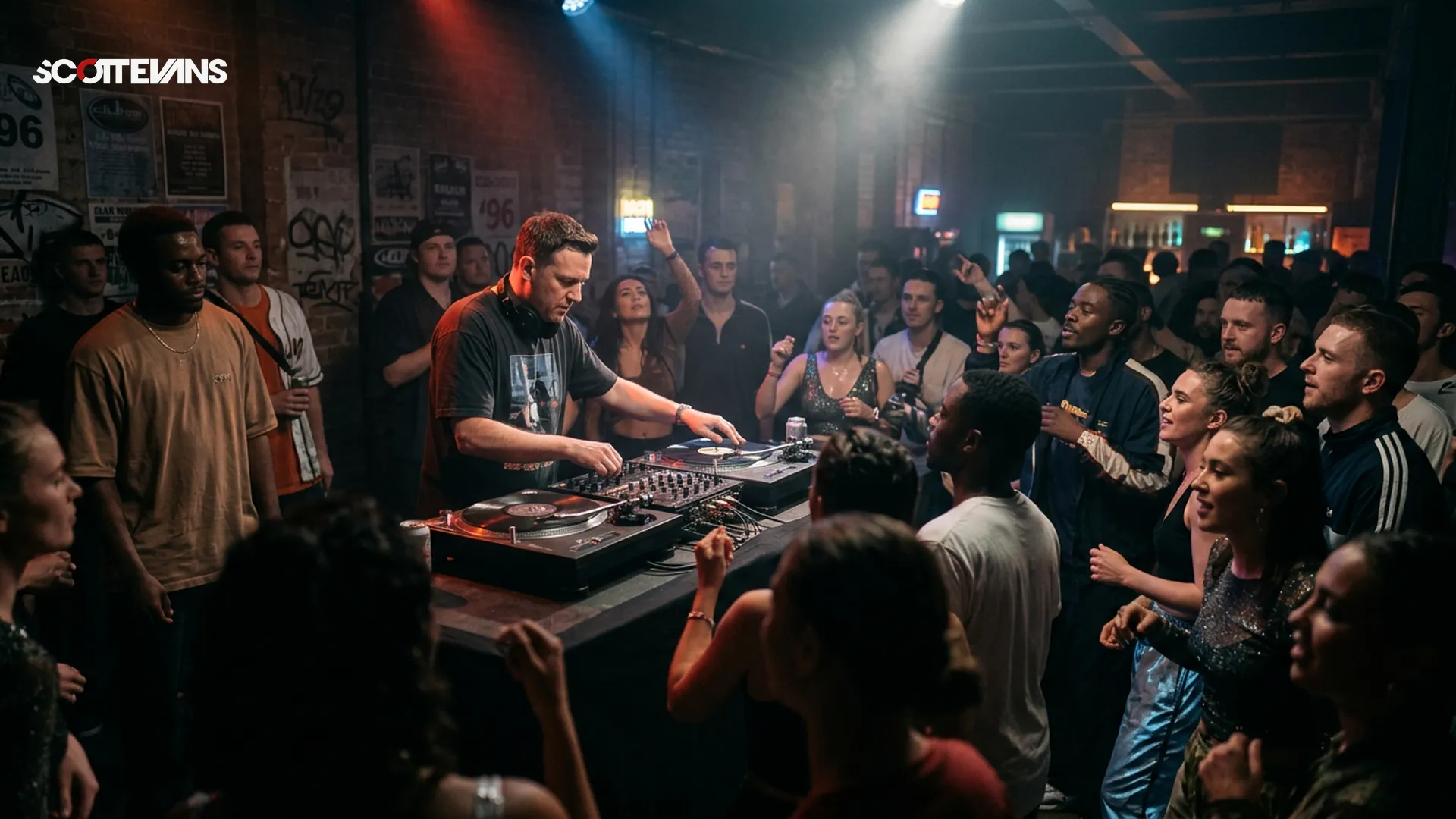
The technical landscape was vastly different. DJs traveled with crates weighing 50+ pounds, beatmatching by ear without waveforms, and reading crowds without social media analytics. Yet the fundamentals remain identical: reading the room, building energy, and creating moments of collective euphoria.
Pro Tip
Breaking Down the Essential Anthems
The House Music Dominance
House music ruled 1996, with Chicago and New York influences merging with UK production sheen. Heller & Farley's "Ultra Flava" claimed the top spot, a track that perfectly encapsulated the era's sound: swinging garage-influenced drums, soulful vocals, and that irresistible rubbery bassline. When mixed today, it provides a masterclass in groove-based DJing that contrasts sharply with modern grid-locked productions.
Todd Terry's "Jumpin'" (Rhythm Masters thumpin mix) demonstrated how producers layered tribal percussion under vocal hooks. This track sits perfectly around 126-128 BPM, making it compatible with contemporary tech house sets. Use our BPM Calculator to find the exact tempo for your rekordbox or Serato library.
Lisa Marie Experience's "Keep On Jumpin'" (Bizarre Inc. remix) secured the second position, showcasing the piano house revival that defined mid-90s peak-time moments. The track's simple chord progression and energetic vocal samples create what industry analysts call "hands-in-the-air" moments that transcend generational divides.
Trance and Progressive Emergence
While house dominated, 1996 witnessed trance breaking into mainstream consciousness. Robert Miles' "Children" reached number three, introducing melodic, emotional electronic music to global audiences. At around 137 BPM, it sits higher than typical house tempos, creating interesting mixing challenges for modern DJs.
Tempo & Timing: tap tempo
Tap a manual tempo estimate, then use the same BPM for effects and phrases
BBE's "7 Days & One Week" combined trance aesthetics with progressive house structure, creating that distinctive "build and drop" template still used today. When programming these tracks, consider using our Key Finder tool to ensure harmonic compatibility with contemporary productions in similar tonal centers.
Underworld's "Born Slippy" (number 12) bridged the gap between progressive house and techno, later gaining massive exposure through the film Trainspotting. Its rolling bassline and stream-of-consciousness vocals demonstrate how leftfield tracks could achieve commercial success while maintaining underground credibility.
The UK Garage and Speed Garage Seeds
Several tracks in the top 50 hinted at the UK garage explosion that would dominate the late 90s. The "Lisa Marie sequential dub experience" remix of "Klubbhopping" featured pitched-up vocals and skittering hi-hats that prefigured two-step rhythms. These tracks typically range between 130-135 BPM, creating a "speed garage" pocket that works surprisingly well in modern bassline sets.
Gat Decor's "Passion" (Grant Nelson vocal pressure mix) showcased the "dub mix" philosophy where vocals appear sparingly, allowing DJs to layer acapellas or instrumental sections. This approach remains relevant for modern open-format DJs using our DJ AI Suite to create mashups and blends.
Technical Analysis for Modern DJs
Tempo Transitions and Energy Management
One challenge when programming 1996 classics involves tempo variation. Modern electronic music often locks rigidly at 128 BPM (house) or 150 BPM (techno), but 1996 tracks fluctuated naturally between 122-140 BPM. This variation actually benefits creative mixing, allowing you to ramp energy up or down organically.
When blending "Children" (137 BPM) into a modern 128 BPM house set, try using the echo freeze technique on the outgoing track's final beat, then drop the new track on the one. Alternatively, use our Set-to-Content tool to create video transitions that mask tempo shifts visually while maintaining audio flow.
Key Compatibility and Harmonic Mixing
Many 1996 productions utilized minor keys and modal interchange that create tension when mixed with contemporary major-key festival house. Tracks like Alcatraz "Give Me Luv" (Deep Dish 11th hour remix) and Sister Bliss "Bad Man" work best when mixed with other minor key records or used as emotional contrast moments in your set.
The chord progressions in these classics often follow jazz-influenced patterns rather than modern "four-chord loop" structures. This means they can serve as "palette cleansers" between repetitive modern tech house tracks, resetting the crowd's ears for maximum impact.
Audio Quality Considerations
Original 1996 vinyl pressings and early digital files present unique audio characteristics. They often feature less sub-bass extension than modern tracks but possess greater dynamic range and mid-range punch. When playing these in modern PA systems, apply high-pass filtering around 30Hz to prevent sub-bass buildup, and consider slight mid-range EQ boosts around 1-2kHz to help the vocals cut through contemporary productions.
| Feature | 1996 DJ Setup | 2024 Modern Setup |
|---|---|---|
| Music Source | Vinyl crates (50+ lbs) | USB sticks/SSD (weightless) |
| Beatmatching | Manual by ear | Sync button/waveforms |
| Track Selection | Physical memory/crates | Digital libraries with smart tags |
| Audio Format | Analog vinyl (warmth/noise) | Digital WAV/AIFF (pristine/clinical) |
| Crowd Reading | Direct eye contact | Phone screens/social media |
| Key Detection | Manual piano/ear | Software analysis (Mixed In Key, etc.) |
Hidden Gems Beyond the Top 10
While everyone knows "Children" and "Ultra Flava," digging deeper into the chart reveals overlooked weapons for modern DJs. Ken Doh's "Nagasaki" (number 23) offers a perfect bridge between hard house and trance, sitting at a versatile 135 BPM. Its acidic bassline and breakdown structure work brilliantly in contemporary melodic techno sets.
Poltergeist's "Vicious Circles" (Union Jack remix) represents the psychedelic trance influence creeping into mainstream clubs, featuring 303 acid lines and atmospheric pads that resonate with current neo-trance trends. At 138 BPM, it mixes seamlessly with modern Anjunabeats-style productions.
For deeper moments, Rollo Goes Spiritual's "Let This Be A Prayer" provides gospel-influenced house that contrasts beautifully with the minimal aesthetic dominating current underground scenes. The track's live instrumentation and organic drums offer textural variety that prevents listener fatigue during long sets.
Building a 1996 Tribute Set
Creating a cohesive set using these classics requires understanding the era's flow. Unlike modern "drop after drop" programming, 1996 sets built gradually over 90-120 minutes. Start with lower BPM garage-influenced tracks like Nicole's "Running Away," progress through piano house anthems like Livin' Joy's "Don't Stop Movin'," peak with high-energy vocal tracks like JX's "Nothing I Won't Do," then wind down with progressive numbers like Bedrock's "For What You Dream Of."
Consider using acapellas from these classics over modern instrumentals. The vocal from "Stand Up" by Love Tribe works surprisingly well over contemporary bass house beats, creating a "best of both worlds" moment that educates younger crowds while satisfying older heads.
Preserving the Legacy
These tracks represent more than nostalgia; they are educational tools. Analyzing the arrangement of "Trippin' On Sunshine" teaches modern producers about tension and release. Studying the mixdown of "Disco's Revenge" reveals how limited frequency ranges can create more impactful club music than maximized-to-death modern masters.
For mobile DJs, these tracks offer universal appeal at weddings and corporate events, crossing demographic boundaries in ways that current chart music cannot. The familiar piano riffs of "The Nightrain" or "Keep Pushin'" trigger immediate positive responses from audiences aged 25 to 55.
Harmonic Mixing Guide
Find compatible keys using the Camelot wheel
Pro Tip
Frequently Asked Questions
Most tracks from this era fall between 122-128 BPM for house and garage styles, while trance and progressive tracks typically range from 135-140 BPM. Unlike modern productions that use rigid quantization, these tracks often fluctuate slightly in tempo, requiring manual beatmatching skills. Use our BPM Calculator to map out your set's energy curve before performing.
Key Takeaways
- Core takeaway: Essential 1996 dance anthems works best with a repeatable prep-to-performance workflow.
- Prioritize one stable process before adding extra tools or plugins.
- Track outcomes after each set and keep only steps that improve reliability and results.