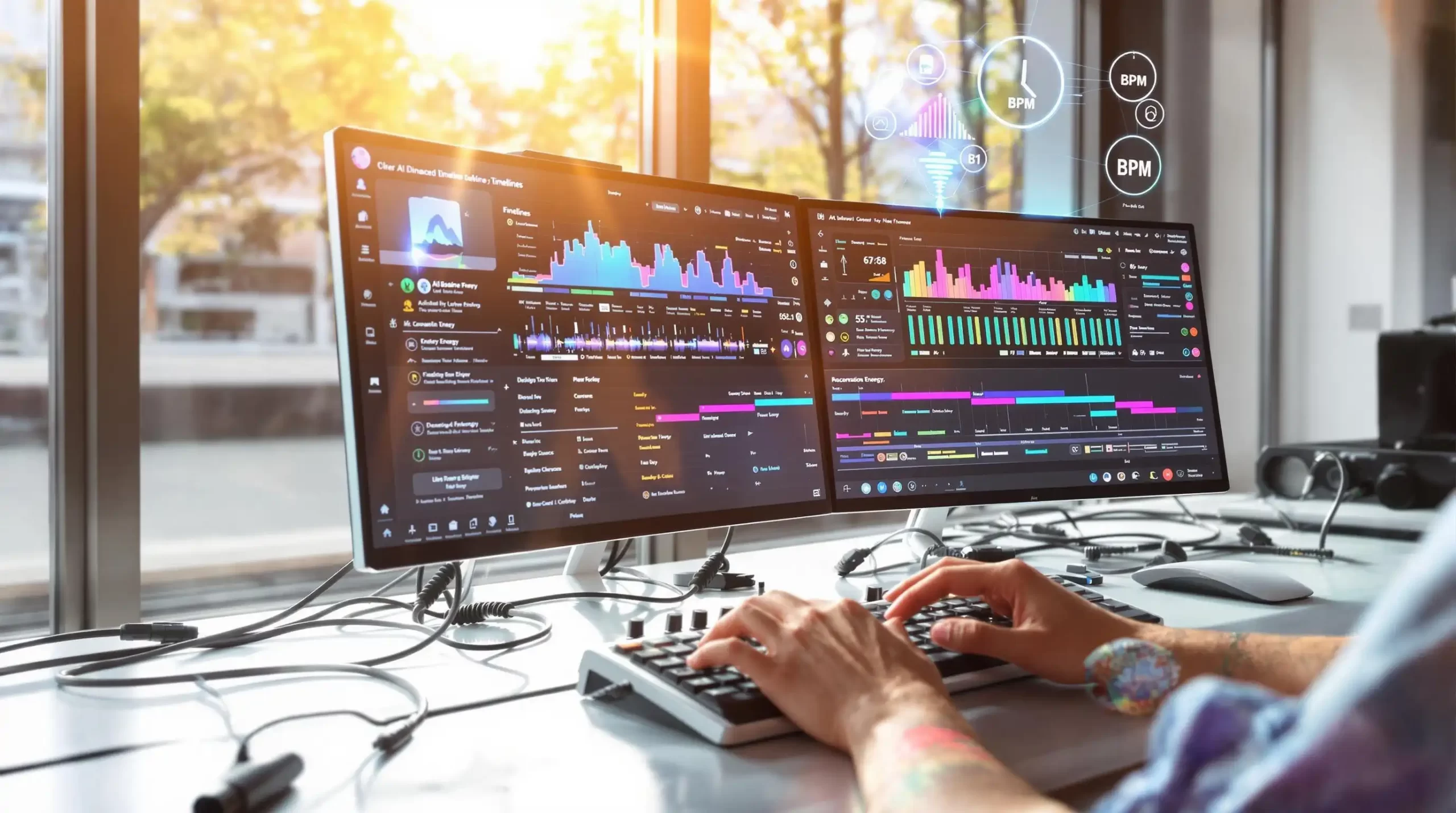
The landscape of digital DJing has shifted dramatically. In 2026, artificial intelligence is no longer just a buzzword used to sell software updates. It has become a foundational element of how professionals prepare their music, analyze their libraries, and execute live performances.
Industry analysts report that DJs who adopt automated workflows save an average of ten hours per week on track preparation alone. This is time that can be reinvested into discovering new music, practicing complex transition techniques, or building a brand. Understanding how to harness a DJ AI Suite is critical for anyone looking to maintain a competitive edge in modern electronic music.
The Scott Evans DJ Takeaway
1. Automated Mixing and Beat Preparation
Automated mixing software has completely changed how DJs approach their set construction. The days of manually adjusting beatgrids for every single track in your library are fading fast. Modern AI tools analyze audio files with incredible precision, identifying the transient peaks of kicks and snares to build flawless grids instantly.
Advanced Beatmatching and Sync
While traditional beatmatching remains a vital skill, auto beat-sync technology has evolved. Current algorithms do not just match the tempo. They analyze the groove and swing of a track, making micro-adjustments to ensure that complex polyrhythms lock together without phase cancellation. This is especially useful when mixing genres with live, unquantized drumming like funk, disco, or classic house.
| Workflow Element | Traditional DJ Method | AI-Optimized DJ Method |
|---|---|---|
| Beatgridding | Manual adjustment and warping per track | Automated micro-timing correction upon import |
| Cue Points | Manually listening and dropping markers | AI-detected drops, breakdowns, and vocal starts |
| Playlist Sorting | Manual BPM and genre tagging | Smart crates with dynamic energy routing |
| Audio Processing | Standard global EQ | Real-time stem isolation and dynamic EQ |
By trusting the software to handle the mathematical alignment of beats, you free up mental bandwidth. This allows for more intricate EQ work, live looping, and the integration of external hardware synthesizers or drum machines into your DJ setup.
2. Stem Separation Technology: Unlocking Live Mashups
Stem separation is arguably the most significant leap in DJ technology over the past decade. This innovative process allows DJs to isolate individual elements within a fully mastered song. You can instantly separate vocals, drums, basslines, and melodies directly from a stereo file.
Managing CPU Load and Audio Quality
When utilizing real-time stem separation, it is crucial to understand your hardware limitations. Processing four distinct audio stems on the fly requires significant CPU power and can impact your audio buffer size. To avoid latency or audio dropouts during a live performance, many professionals choose to pre-analyze their tracks offline.
By rendering the stems during your preparation phase, your laptop only needs to play back the separated audio files rather than calculating the algorithms in real time. This workflow optimization ensures maximum stability when playing in high-pressure club environments.
3. Harmonic Mixing and Key Detection
Harmonic mixing is a technique that greatly enhances the flow of a DJ set by ensuring transitions between tracks are musically compatible. Mixing tracks in clashing keys can ruin the energy of a dance floor, creating dissonant frequencies that sound muddy and chaotic.
Musical Key Analysis
Modern AI algorithms can analyze a track's key with near-perfect accuracy, even identifying mid-song key changes or complex jazz chords that used to confuse older software. Using a dedicated Key Finder tool helps DJs map out their sets using the Camelot wheel system, ensuring that every blend sounds like a studio-produced remix.
Advanced tools now offer dynamic key shifting. If a track is one semitone away from a perfect harmonic match, the software can pitch-shift the audio without degrading the transient quality of the drums. This gives you the creative freedom to combine tracks that would have previously been impossible to mix harmonically.
4. Time-Saving Features in DJ Software
A streamlined workflow is all about eliminating repetitive tasks. AI DJ software optimizes your preparation phase with several highly effective time-saving features.
Automated Cue Point Setting
Setting hot cues is essential for quick navigation during a live set. AI tools can now scan a track and automatically place cue points at the intro, first drop, breakdown, and outro. The software recognizes structural changes in the music by analyzing waveform density and frequency shifts. You can always adjust these markers manually, but starting with an AI-generated template saves massive amounts of time.
Intelligent Playlist Generation
Building a cohesive setlist can be daunting. Advanced algorithms can analyze your entire music library and generate curated playlists based on BPM, key compatibility, and energy levels. If you need a warm-up set for a deep house gig, the software can pull together a flawless selection of 115 to 120 BPM tracks that build gradually in intensity.
Harmonic Mixing Guide
Find compatible keys using the Camelot wheel
Tempo & Timing: tap tempo
Tap a manual tempo estimate, then use the same BPM for effects and phrases
To dive deeper into organizing your digital crates, check out our Guide to DJ Library Management.
5. Real-Time Feedback During Performances
AI technology is also changing how DJs interact with the crowd. Real-time feedback tools provide instant data on your performance, helping you make informed decisions on the fly.
Crowd Engagement Metrics
Some advanced setups utilize audio-reactive sensors and camera data to gauge crowd movement and noise levels. If the energy on the dance floor begins to dip, the software might suggest a high-energy track from your library that matches your current BPM and key. While a DJ's intuition is always the primary driver, having data-backed suggestions can be a lifesaver when a set starts to lose momentum.
Phase and Latency Alerts
If you are mixing manually and your tracks begin to drift out of phase, AI tools can provide subtle visual alerts before the audience hears the mistake. This allows for rapid micro-corrections using the jog wheel, ensuring your transitions remain tight and professional.
6. Streamlining Promotion with Set-to-Content Workflows
Creating engaging promotional content is often the most frustrating part of a DJ's career. You want to spend your time mixing, not editing videos for social media. This is where AI truly shines outside of the DJ booth.
Using a Set-to-Content workflow allows you to automate your promotional efforts. By recording your live sets and feeding them into AI video editing software, the system can automatically identify the most exciting transitions, drops, and crowd reactions. It then clips these moments into vertical videos perfectly sized for social media platforms.
This workflow ensures you have a constant stream of high-quality promotional material without spending hours in video editing software. For more tips on building your brand, review our DJ Marketing Strategies.
Conclusion: Embracing the Future of DJing
The integration of artificial intelligence into the DJ booth is not a passing trend. It is a fundamental shift in how artists prepare, perform, and promote their music. By embracing AI DJ workflow optimization, you are not taking shortcuts. You are utilizing professional tools to eliminate tedious manual labor, allowing your true creativity to take center stage.
Take the time to experiment with automated cueing, stem separation, and smart playlists. Customize these tools to fit your unique style. The DJs who master this technology today will be the ones leading the industry tomorrow.
Frequently Asked Questions
AI DJ workflow optimization is the process of using artificial intelligence software to automate repetitive tasks in a DJ's routine. This includes automated beatgridding, key detection, intelligent playlist generation, and stem separation, allowing the DJ to save preparation time and focus on creative live performance.
Key Takeaways
- Core takeaway: Evolution workflow optimization 2026 works best with a repeatable prep-to-performance workflow.
- Prioritize one stable process before adding extra tools or plugins.
- Track outcomes after each set and keep only steps that improve reliability and results.