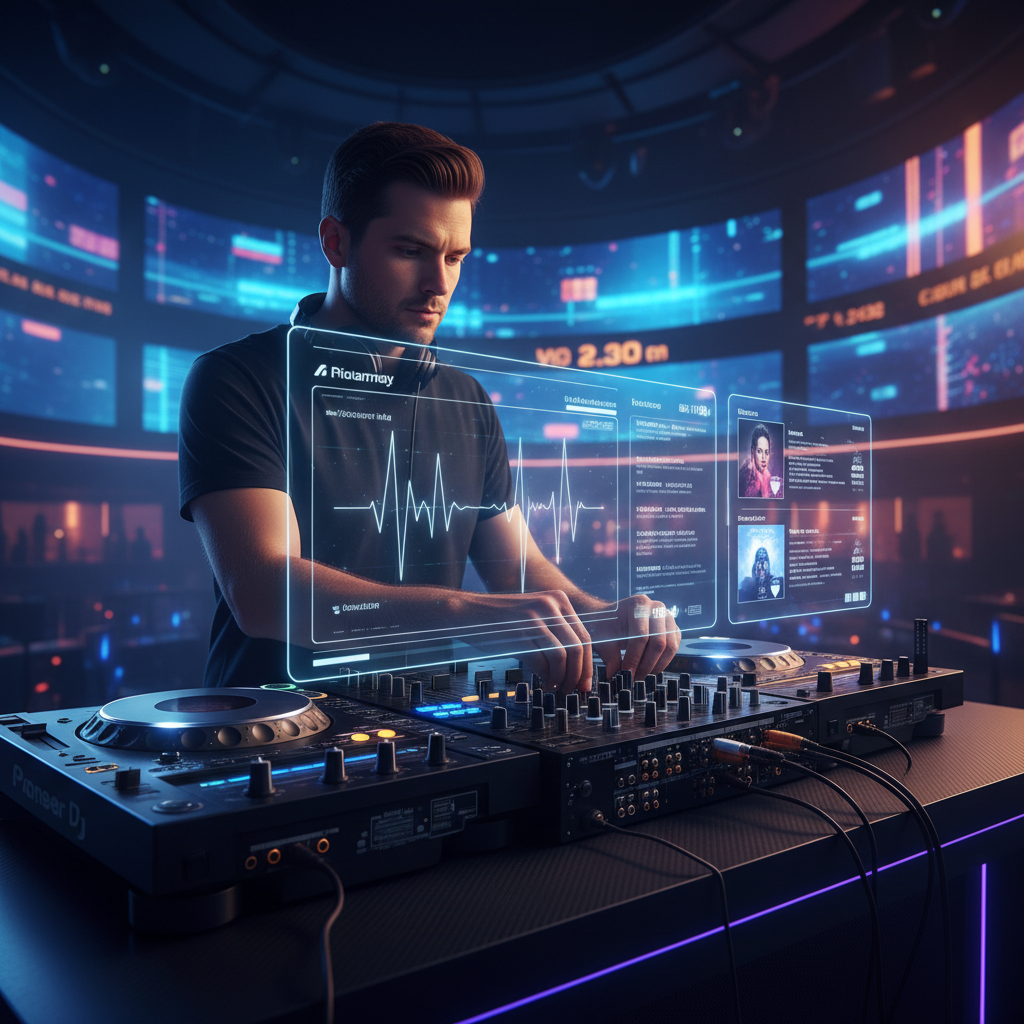
How Machine Learning Is Revolutionizing Personalized DJ Playlists | Scott Evans DJ
Machine learning in music personalization operates through sophisticated neural networks that process multi-dimensional data vectors. Unlike rule-based systems that rely on rigid genre classifications, modern algorithms analyze audio fingerprints, user interaction patterns, and temporal listening behaviors to predict musical compatibility.
For DJs, understanding these mechanics provides insight into how streaming platforms influence audience expectations. When Spotify or Apple Music generates a "Personalized DJ Playlist," the system evaluates:
- Audio Feature Extraction: Tempo, key, energy levels, and spectral characteristics
- Sequential Pattern Analysis: Transition preferences and session-based listening flows
- Collaborative Filtering: Cross-referencing taste profiles across user clusters
- Contextual Signals: Time of day, device type, and location-based mood indicators
The Scott Evans DJ Takeaway
Data Architecture and User Behavior Modeling
Streaming platforms collect granular interaction data that informs playlist generation. Every skip, save, repeat, and share feeds reinforcement learning models that refine future recommendations. This creates feedback loops where the system becomes increasingly accurate at predicting listener preferences.
Key data categories include:
- Explicit Feedback: Likes, playlist additions, and search queries
- Implicit Signals: Listening duration, skip rates, and volume adjustments
- Temporal Patterns: Weekend versus weekday preferences, seasonal shifts
- Social Graphs: Network-based recommendations from taste-aligned users
For mobile DJs and club residents, this data architecture mirrors the audience reading skills developed through years of live performance. The difference lies in scale: while a human DJ might read 200 people in a room, machine learning systems process millions of simultaneous interactions.
Practical Workflow Integration for Professional DJs
While streaming platforms use machine learning for consumer-facing playlists, working DJs can leverage similar technologies for set preparation and live performance. Modern DJ software incorporates AI features that complement traditional mixing techniques.
| Feature | Streaming ML | DJ Software Integration | Practical Application |
|---|---|---|---|
| Key Detection | Consumer mood matching | Real-time harmonic mixing | Camelot wheel automation |
| BPM Analysis | Tempo-based playlist flow | Beatgrid accuracy | Sync and transition timing |
| Energy Profiling | Workout/chill segmentation | Dynamic range analysis | Set arc construction |
| Vocal Detection | Content filtering | Stem separation | Acapella extraction |
Pro Move: When preparing for a gig, export your playlist data and run it through a BPM Calculator and Key Finder to verify the harmonic relationships your software's AI has detected. Machine learning is powerful but not infallible, particularly with obscure tracks or complex jazz harmonies.
Tempo & Timing: tap tempo
Tap a manual tempo estimate, then use the same BPM for effects and phrases
Harmonic Mixing Guide
Find compatible keys using the Camelot wheel
The Evolution of AI DJ Features
Spotify's AI DJ and similar features represent a convergence of generative AI and music curation. These systems combine large language models for voice commentary with recommendation engines for track selection. For professional DJs, this technology signals shifting audience expectations regarding narrative flow and contextual awareness.
The AI DJ feature specifically demonstrates:
- Generative Voice Synthesis: Creating DJ-style commentary between tracks
- Contextual Awareness: Referencing user listening history and current trends
- Dynamic Adaptation: Adjusting tone and selection based on real-time feedback
However, these systems lack the tactile intuition and room-reading capabilities of human DJs. The technology excels at discovery and background listening but cannot replicate the spontaneous energy management required for peak-time dance floor moments.
Reinforcement Learning and Continuous Adaptation
Reinforcement learning allows playlist algorithms to evolve based on user interactions. When you skip a track or listen to completion, the system updates its reward model, adjusting future recommendations to maximize engagement metrics.
This creates a personalization paradox: the system becomes excellent at predicting what you already like, potentially limiting discovery. Professional DJs face a similar challenge when playing it safe with guaranteed floor-fillers versus taking risks on unknown tracks.
Gear Warning: Over-reliance on algorithmic playlists can flatten musical diversity. Maintain manual curation practices by regularly exploring DJ record pools and physical diggin' sessions to preserve the serendipitous discoveries that algorithms might filter out.
Emotional Resonance and The Human Element
Despite technical sophistication, machine learning in music ultimately serves emotional connection. Algorithms analyze valence and arousal metrics (musical happiness and energy levels) to construct journeys that match or modulate listener moods.
For DJs, understanding these emotional architectures provides a framework for set construction:
- Opening Sets: Low arousal, moderate valence (warm-up energy)
- Peak Time: High arousal, high valence (euphoric moments)
- Wind Down: Decreasing arousal, mixed valence (journey conclusion)
The most effective DJs combine this structural awareness with the irreplaceable human ability to read micro-expressions, feel room tension, and respond to unexpected energy shifts.
Future Trajectory: Context-Aware and Multimodal Curation
The next evolution of personalized playlists involves multimodal AI systems that incorporate biometrics, environmental sensors, and social sentiment analysis. Imagine playlists that adjust based on heart rate variability from wearables, ambient noise levels, or collective social media mood indicators.
For the professional DJ ecosystem, this suggests future tools that might:
- Analyze crowd density and movement patterns through venue cameras
- Adjust tempo recommendations based on real-time dance floor energy
- Suggest tracks based on local weather patterns or cultural calendar events
These advancements will likely augment rather than replace human DJs, serving as intelligent assistants that handle technical optimization while the artist focuses on creative expression and crowd connection.
Infographic: The Machine Learning Playlist Pipeline
Frequently Asked Questions
Traditional curation relies on human editors or simple metadata matching (genre, artist, year). Machine learning analyzes complex audio features and behavioral patterns to predict compatibility beyond surface-level classifications. The system learns from aggregate user behavior to identify non-obvious connections between tracks.
Key Takeaways
- Core takeaway: Technical foundation driven music works best with a repeatable prep-to-performance workflow.
- Prioritize one stable process before adding extra tools or plugins.
- Track outcomes after each set and keep only steps that improve reliability and results.